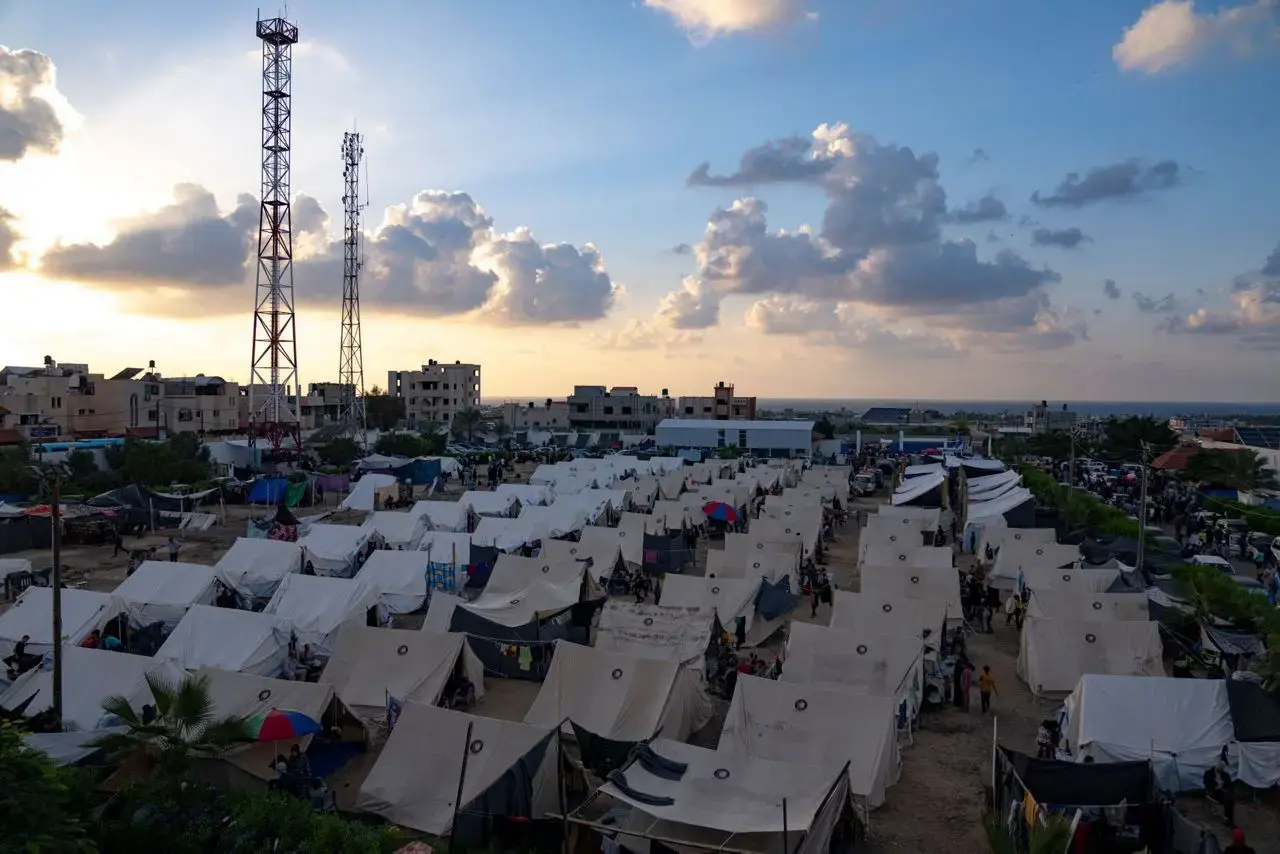
Recent United Nations reports indicate the continued escalation of armed conflicts in several regions of the world, accompanied by increasingly severe humanitarian consequences affecting civilians, particularly children. Data from UNICEF show that more than 473 million children are currently living in conflict zones worldwide — the highest level recorded in decades — reflecting the expanding scope and complexity of conflicts and their profound impact on childhood globally. In 2024 alone, more than 41,370 grave violations against children were documented in conflict settings — including killings, forced recruitment, and attacks on schools and hospitals — representing an increase of approximately 25% compared to the previous year, according to United Nations child protection reports. Estimates further indicate that the Middle East and North Africa region includes more than 110 million children living in conflict-affected countries, where a child is reported injured or killed every 15 minutes in certain contexts, underscoring the fragility of affected environments and the gravity of the humanitarian situation. At the response level, UNICEF’s Humanitarian Action for Children 2025 appeal called for USD 9.9 billion to support approximately 109 million children living in critical humanitarian conditions, highlighting the widening funding gap and the growing challenges in meeting essential needs.
From emergency response to the necessity of an integrated approach
The challenges related to protecting children in conflict settings are no longer limited to immediate humanitarian interventions; rather, they now require a multi-dimensional approach that links protection, education, health, psychosocial support, and resilience-building. International organizations emphasize that effective response depends on close coordination among governments, international organizations, and local actors, in addition to flexible funding mechanisms and rapid response capacity in evolving environments. Respect for international humanitarian law and the protection of civilians also remain fundamental pillars for reducing violations and mitigating long-term risks, requiring strengthened accountability and international monitoring mechanisms.
Funding Challenges and the Importance of Data-Driven Response
Despite ongoing international efforts, child protection programs in conflict settings face complex challenges that go beyond traditional funding shortages. The current funding gap is not only about insufficient resources, but also about the distribution of those resources, their flexibility, and their ability to respond swiftly to rapidly changing field dynamics. Restrictions on humanitarian access in certain areas, the politicization of aid, and bureaucratic complexities further slow interventions and limit their tangible impact on the ground.
Moreover, many fragile contexts suffer from weak data collection and updating systems, leading to gaps in understanding actual needs and the scale of risks faced by children. In unstable environments, data can quickly become outdated or incomplete, limiting decision-makers’ ability to accurately set priorities and negatively affecting resource allocation to the most vulnerable groups. This highlights the importance of shifting from reactive response models to proactive approaches grounded in real-time and integrated monitoring and analysis systems. Platforms capable of continuously collecting and analyzing data enable a more precise understanding of conflict dynamics and their impact on children, helping direct interventions toward the most at-risk areas rather than relying on general or delayed assessments.
Relief Center believes that the effectiveness of humanitarian response is not measured solely by the size of financial pledges or the number of announced initiatives, but by its ability to translate international commitments into measurable, practical interventions that effectively reach the most vulnerable children. Empowering local organizations and strengthening their role within the protection ecosystem is a central element in improving response speed and contextual relevance, given their proximity to affected communities and their ability to operate in complex environments. The Center further emphasizes that addressing the funding gap cannot be separated from addressing the information gap. The more accurate and timely the data, the more efficient resource allocation becomes and the greater the impact of interventions. Therefore, investing in monitoring and analytical systems, building the capacities of local actors, and enhancing coordination across national and international levels constitute a foundational basis for building a more just, effective, and sustainable humanitarian system capable of narrowing response gaps and strengthening the protection of children in the most fragile environments.