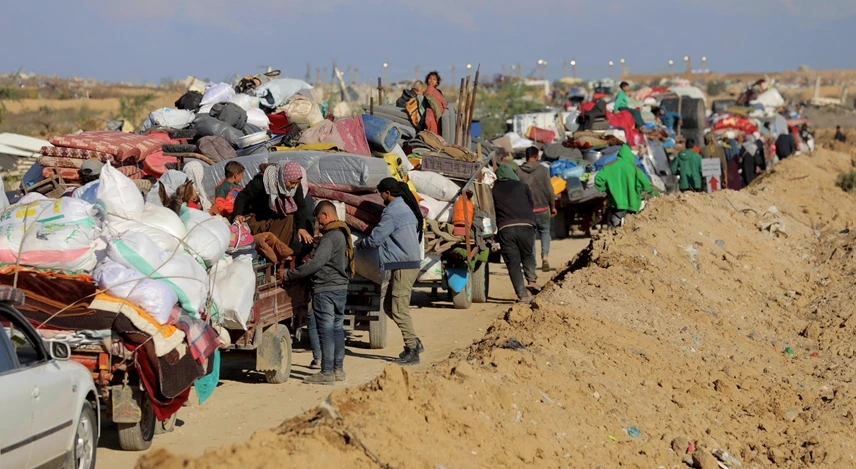
Accumulated humanitarian experience across disaster and protracted crisis contexts demonstrates that the effectiveness of humanitarian response cannot be measured solely by funding volume or speed of intervention. Rather, it is fundamentally linked to the readiness of local organizations and their institutional capacity to manage crises and contain their impacts on affected communities. Analyses by the United Nations Office for the Coordination of Humanitarian Affairs (OCHA) consistently highlight that local actors are often the first to reach affected populations due to their geographic proximity and contextual knowledge. However, this frontline presence does not automatically translate into effective response unless it is supported by robust internal systems and institutional capacity.
Institutional Readiness Gaps in Disaster Contexts
In many emergency settings, reports by the Inter-Agency Standing Committee (IASC) indicate that local organizations face structural gaps related to governance systems, emergency planning, risk management, and coordination mechanisms. These gaps do not diminish the importance of local actors, but they significantly constrain their ability to scale operations, sustain interventions, and respond to complex, rapidly evolving crises. As disasters increase in frequency and intersect with long-term conflicts and socio-economic fragility, the absence of systematic institutional assessment becomes a direct factor in limiting humanitarian impact, even where active local presence exists.
Within this context, specialized humanitarian and disaster-response training programs emerge as a central tool for building organizations capable of operating under pressure. The Core Humanitarian Standard (CHS) emphasizes that training on humanitarian principles, disaster management, relief coordination, information management, and community engagement is not merely about enhancing individual skills. Rather, it is about building integrated institutional systems that enable sound decision-making, effective resource management, and accountability during crises.
Operational experiences documented by the World Food Programme (WFP) further demonstrate that the absence of specialized training limits the ability of local organizations to meet humanitarian standards or engage effectively with partners, even when funding is available. Conversely, investment in structured training programs linked to internal policy and procedural development has been shown to transform local organizations from limited implementing entities into capable institutions able to manage crises and support affected communities both operationally and psychosocially.
Empowerment Cannot Precede Assessment
Analyses published by The New Humanitarian underline that attempts to empower local organizations without grounding such efforts in rigorous institutional assessment often result in fragmented or unsustainable outcomes. Effective empowerment is not achieved through funding transfers or generic training alone, but through objective diagnosis of organizational maturity, strengths, and structural gaps. Institutional assessment serves as a critical tool for ensuring that capacity-building and training interventions are targeted, sequenced, and realistic, thereby improving program quality, humanitarian compliance, and trust with partners and donors.
Localization as a Governing Framework for Local Response
Within this framework, localization emerges not as a rhetorical commitment, but as a governing lens for reshaping humanitarian response. Commitments under the Grand Bargain and its localization workstreams emphasize that strengthening local leadership, coordination, and accountability is central to achieving more effective and equitable humanitarian systems. Investment in institutional assessment, training, and internal capacity development directly supports this agenda by enabling local organizations to lead responses, manage resources, and engage confidently within the broader humanitarian architecture.
Toward More Resilient Local Responses Capable of Containing Crises
As disasters become more frequent and complex, the Sphere Standards indicate that local organizations equipped with clear internal systems, trained teams, and coordination capacity are significantly better positioned to contain crisis impacts—not only in terms of immediate relief delivery, but also in addressing the social and psychosocial dimensions of community recovery. From this perspective, investing in the assessment and empowerment of local organizations through specialized training and institutional development should not be viewed as a short-term support measure, but as a strategic foundation for a more effective, locally anchored humanitarian system capable of protecting lives and upholding human dignity during disasters.