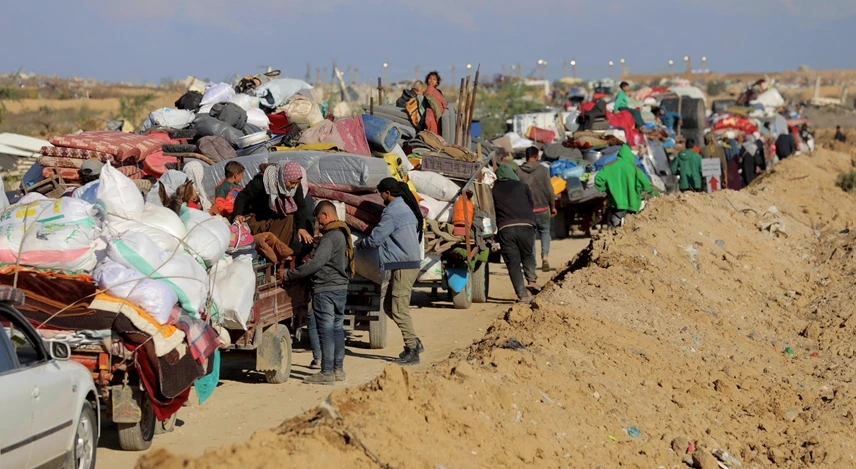
Humanitarian operations around the world are increasingly constrained by escalating political and security complexities that are undermining the ability of humanitarian organizations to deliver assistance to affected civilian populations. These challenges are no longer isolated to specific contexts, but have become a defining feature of a growing number of humanitarian crises, where political considerations and security dynamics intersect to impose conditions that fundamentally contradict the nature and principles of humanitarian work. Such constraints include the confiscation of humanitarian equipment, disruption of communication systems, restrictive bureaucratic procedures, and limitations on the movement of humanitarian personnel, all of which directly affect the speed, quality, and continuity of humanitarian response.
Escalating Constraints Undermining Humanitarian Access
In many crisis-affected contexts, humanitarian access has become subject to shifting political and security calculations, with aid increasingly used—implicitly or explicitly—as a tool of leverage or negotiation. The confiscation of equipment and the disruption of communications do not merely hinder logistical operations; they severely limit the ability of humanitarian teams to conduct field assessments, monitor needs, and maintain timely communication with affected communities. Movement restrictions further delay or completely block the delivery of assistance, transforming urgent humanitarian needs into deepening crises. These practices create an unstable operating environment in which short-term planning becomes the norm, and needs-based humanitarian response is replaced by limited interventions driven more by security considerations than by humanitarian priorities. In such conditions, civilians bear the greatest cost, as entire communities are deprived of food, healthcare, or protection—not solely due to resource shortages, but because access to those resources is systematically obstructed.
Analytical Perspective: Humanitarian Action Amid Growing Politicization
These constraints reveal that humanitarian action is increasingly operating within a widening grey zone, where the boundaries between humanitarian, political, and security agendas are steadily eroding. Core humanitarian principles—neutrality, independence, and impartiality—are no longer abstract frameworks, but are tested daily in operational contexts. Where political–humanitarian analysis is insufficient or absent, restrictions are often treated as technical or operational obstacles, rather than manifestations of deeper power structures and conflict dynamics that directly shape the limits of humanitarian intervention. As crises become more protracted, such constraints evolve into entrenched patterns of operation, forcing humanitarian actors to reassess long-held assumptions about partnerships, coordination, and risk management. A significant risk emerges when operating within restrictive environments becomes normalized, potentially leading to the gradual erosion of professional and ethical standards, or the acceptance of constrained roles that fail to meet the actual needs of affected populations.
Toward More Resilient Humanitarian Responses in Complex Environments
In response to this reality, there is an urgent need to rethink humanitarian response models beyond short-term workarounds or temporary adaptations. Building more resilient humanitarian responses requires a deeper understanding of political and security contexts, supported by continuous, dynamic analysis that keeps pace with shifting power relations and operational constraints. This shift also demands moving away from reactive approaches toward more anticipatory models that prioritize early risk identification, scenario planning, and adaptive response strategies. Equally critical is the strengthening of coordination and protection mechanisms—not only among humanitarian organizations, but also through sustained investment in local partnerships. Local actors often possess deeper contextual knowledge, stronger community trust, and greater capacity to operate under restrictive conditions. As such, local partnerships should be understood not as tactical solutions, but as strategic foundations for sustaining access, reducing risk, and preserving the legitimacy and effectiveness of humanitarian action.
Ultimately, the core challenge is not simply overcoming constraints on humanitarian work, but building responses capable of operating within complex political and security environments without compromising humanitarian principles or the safety of humanitarian personnel. Ensuring that assistance reaches those most in need—effectively, safely, and with dignity—has become a defining test for humanitarian action in an increasingly fragmented and politicized world.