Author: Dr. Ola Alkahlout |
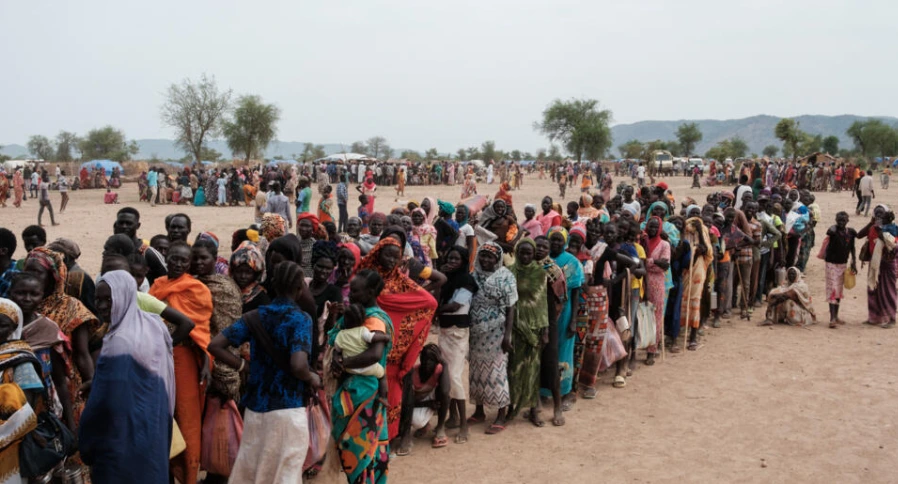
Haiti has been experiencing a rapidly deteriorating security and humanitarian situation due to the escalation of armed gang violence, particularly in the capital Port-au-Prince. The growing presence of armed groups has disrupted basic services and forced thousands of families to flee their homes in search of safer areas. According to data from International Organization for Migration, the number of internally displaced persons (IDPs) in Haiti has exceeded 1.3 million, as a result of escalating violence and prolonged insecurity over the past two years. This represents one of the largest internal displacement crises in the Caribbean region.
These developments are occurring at a time when the country is already facing a profound humanitarian crisis. According to the Humanitarian Needs Overview 2026 issued by United Nations Office for the Coordination of Humanitarian Affairs, approximately 6.4 million people in Haiti require humanitarian assistance, representing more than half of the country’s population. Estimates from World Food Programme also indicate that around 5.7 million people are experiencing acute levels of food insecurity, driven by disrupted markets, rising food prices, and worsening economic conditions.
The escalation of violence has forced the closure of schools and health facilities in several areas and has restricted humanitarian access to certain neighborhoods controlled by armed groups. Displaced families also face significant challenges in securing adequate shelter, food, and clean water, while host communities struggle to cope with limited resources. Humanitarian actors warn that continued insecurity could further increase internal displacement and intensify humanitarian needs, particularly in densely populated urban areas.
Main Humanitarian Needs
- Establishment of safe temporary shelters for displaced families in Port-au-Prince and surrounding areas.
- Support for emergency health services facing shortages of medical personnel and supplies due to insecurity.
- Expansion of food security and cash assistance programs for households that have lost their livelihoods.
- Provision of clean water and sanitation services in overcrowded urban displacement sites.
- Strengthening protection programs for women and children, particularly in areas affected by violence and displacement.
- Support for schools and educational facilities to ensure continuity of learning for affected children.
- Facilitating humanitarian access to violence-affected neighborhoods to ensure consistent delivery of assistance.
Humanitarian Implications
Recent developments in Haiti illustrate how the country’s security crisis has evolved into a complex humanitarian emergency that extends beyond armed violence alone. The expanding influence of armed groups has disrupted public services and critical infrastructure in Port-au-Prince, significantly weakening the ability of national institutions to provide essential services such as education, healthcare, and basic urban management. As a result, humanitarian needs are increasing and many communities are becoming increasingly dependent on humanitarian assistance.
From an operational perspective, the crisis presents major challenges for humanitarian organizations, particularly in ensuring safe and consistent access to affected populations. The presence of armed groups in densely populated urban neighborhoods restricts the movement of humanitarian teams and complicates aid delivery, requiring more adaptive and flexible response mechanisms suited to complex urban crises.
Looking ahead, continued violence and growing displacement risks further deepening Haiti’s humanitarian crisis, especially amid persistent economic fragility and widespread poverty. Without coordinated efforts that combine humanitarian assistance with broader stabilization and recovery measures, the country may face prolonged displacement and worsening living conditions for vulnerable communities.