A Reliable Knowledge Base for a Deeper Understanding of Humanitarian Work

Written Knowledge

This section brings together a curated selection of books, articles, and specialized reports in the humanitarian field, prepared or reviewed by experts to ensure quality and accuracy, alongside the analytical reports and specialized studies published regularly by the Relief Center. Here, you can explore a rich collection of policy papers, analytical studies, and opinion pieces, categorized by type, theme, or language. These resources help you build a deeper understanding of humanitarian contexts and support your professional decisions with solid, evidence-based knowledge.

There are: 15 items
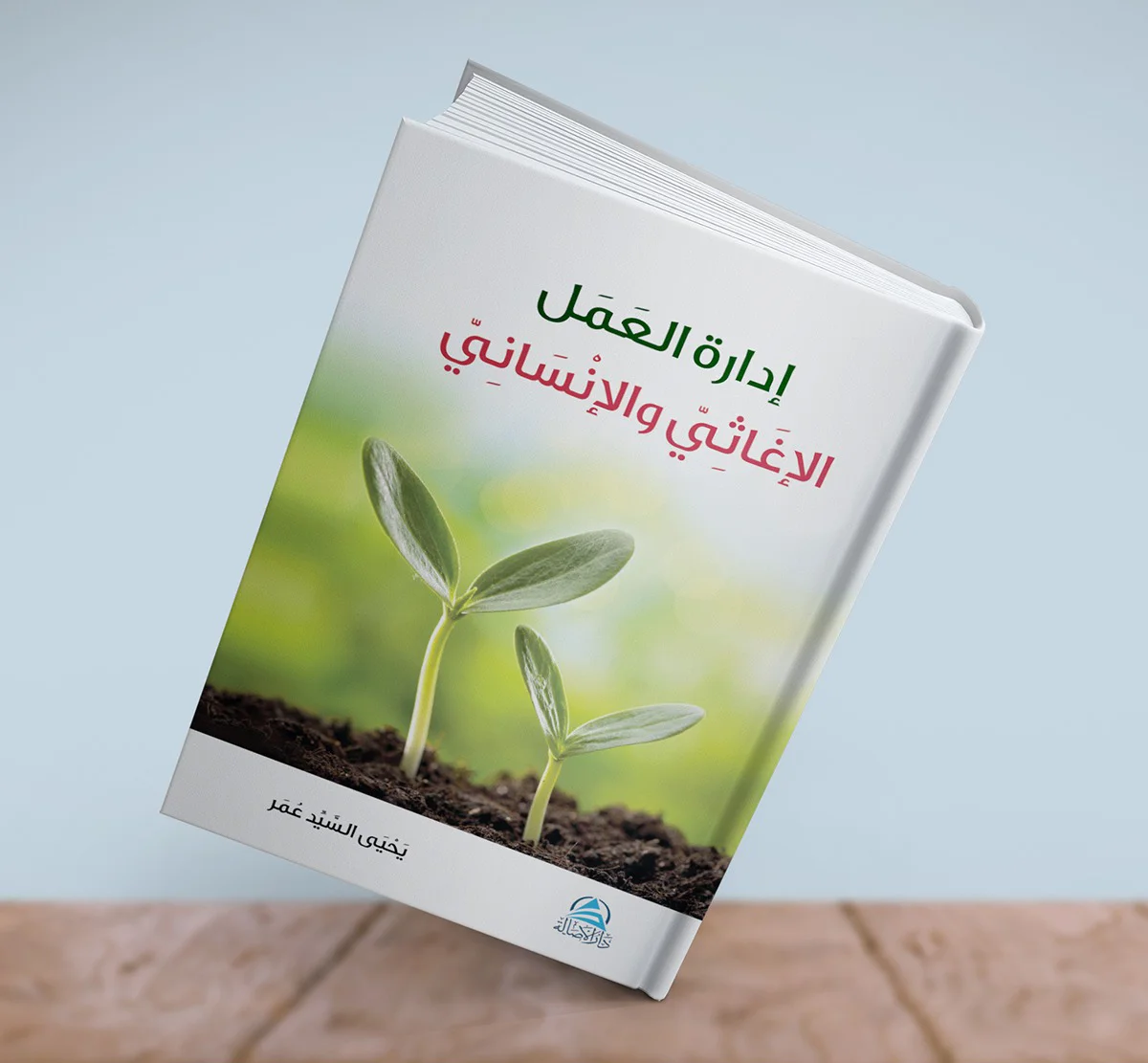
Management of Relief and Humanitarian Work
2021

The book serves as a comprehensive and professional reference that offers an integrated, practical framework for managing relief and humanitarian operations in crisis and disaster contexts—particularly in Arab and Islamic regions that have witnessed a rise in natural disasters and conflicts. Spanning 750 pages and published in 2021, the book draws on real Arab field experiences derived from the work of humanitarian organizations in areas such as northern Syria. Its goal is to equip humanitarian personnel with the skills needed to address complex challenges, while emphasizing the integration of Islamic principles such as zakāt and ṣadaqah as sustainable financing tools.The book systematically covers the stages of planning and humanitarian intervention, beginning with needs assessment and strategic planning, progressing through operational implementation, and culminating in monitoring and evaluation. It employs practical tools such as the Logical Framework Approach for humanitarian project design and SWOT analysis to assess strengths, weaknesses, opportunities, and threats within relief organizations. The book also highlights the importance of supply chain management - including logistics and effective aid distribution - to ensure assistance reaches affected populations efficiently, while taking into account challenges such as geographical and security constraints.In the context of resource coordination, the book discusses mechanisms for multilateral cooperation among humanitarian actors, including NGOs, international entities (such as the Sphere Project for relief standards), and local governments. It stresses adherence to core humanitarian principles such as neutrality and transparency to avoid overlaps and enhance overall effectiveness.Additionally, the book incorporates aspects of financial oversight, including donor requirements, humanitarian funding through Islamic mechanisms such as waqf, and performance measurement using KPIs to ensure accountability and financial efficiency. Risk management is presented as a fundamental element, offering models for crisis and risk management - including disaster preparedness and the provision of aid to non-Muslims in accordance with Islamic jurisprudence - while emphasizing organizational structuring, training, and continuous professional development.The book also addresses interconnected domains such as ethics, documentation, media, marketing for relief organizations, persuasion skills, and creativity in humanitarian work. It draws on field case studies from the Arab region to illustrate the practical application of these concepts in real-world settings such as the Syrian conflict or natural disasters.

Author: Yahya Al-Sayed Omar
Publisher: Asalet Yayınları (Turkey)
Language: Arabic
Reference Number: -

A Review of Approaches to the Integration of Humanitarian and Development Aid: The Case of Drought Management in the Horn of Africa
2025

The researchers Tahira S. Mohamed, Todd Andrew Crane, Samuel F. Derbyshire, and Guyo M. Roba published a study titled "A Review of Approaches to the Integration of Humanitarian and Development Aid: The Case of Drought Management in the Horn of Africa" in the Frontiers journal, issued by the Odessa Centre, on January 24, 2025.The study addresses the challenge of integrating humanitarian aid with long-term development assistance in pastoralist regions of the Horn of Africa, a topic frequently discussed in development and humanitarian response literature. However, practical progress in this area has remained limited, primarily due to the complexity of the aid ecosystem and the lack of effective community engagement.The study aims to analyze practical strategies implemented to achieve this integration, with a particular focus on the relationship between humanitarian and development aid in the context of emergency responses to drought in the Horn of Africa. The research is grounded in a comprehensive systematic review of relevant literature, coupled with a critical analysis of field experiences, particularly within the framework of the IDDRSI (Initiative for Resilience Building in the Horn of Africa) and Community-Managed Disaster Risk Reduction (CMDRR) programs. The study also examines the extent to which local practices have been leveraged to enhance community resilience to future shocks. The findings reveal that multiple policy initiatives and the adoption of new frameworks have not yet led to tangible improvements in integrating humanitarian and development aid. The study identifies bureaucratic complexity, the multiplicity of stakeholders, and weak community participation as key structural barriers to effective and sustainable integration conclusion, the researchers assert that achieving integration between humanitarian and development aid in pastoralist settings requires a multidimensional approach that accounts for contextual and cultural specificities and prioritizes the active involvement of local communities as key actors, not merely beneficiaries. The study emphasizes the importance of coordination among humanitarian aid, resilience-building initiatives, and community practices to foster synergy and facilitate the exchange of lessons learned within a realistic agenda that is more transparent and aligned with the actual needs of the population.

Author: Tahira S. Mohamed, Todd Andrew Crane and others
Publisher: Pastoralism: Research, Policy and Practice, Volume 15
Language: English
Reference Number:

Developmental Humanitarian Action: Reinventing Humanitarian Aid in Conflict and Post-Conflict Situations – An Advocacy for the Case of the Middle East and North Africa Region
2025

Researcher Ferid Belhaj published a study entitled “Developmental Humanitarian Action: Reinventing Humanitarian Aid in Conflict and Post-Conflict Situations – An Advocacy for the Case of the Middle East and North Africa Region” in the Policy Center for the New South Journal, October 2024. The study highlights the main challenges hindering humanitarian work in the Middle East and North Africa (MENA), notably limited financial resources and the political and economic pressures on host countries facing crises. It argues that traditional humanitarian aid has proven insufficient in addressing the region’s recurrent and complex crises, thereby underscoring the need for a more holistic approach that integrates development goals with urgent relief interventions in order to establish long-term and sustainable solutions.Adopting a realistic approach that takes political and economic dynamics into account, the study calls for the development of innovative financing mechanisms to strengthen developmental-oriented humanitarian action. In this context, it employs an analytical framework to examine the impact of the Global Concessional Financing Facility (GCFF) on humanitarian aid, illustrating how the program enabled middle-income countries such as Lebanon and Jordan to access concessional financing that enhanced their ability to manage humanitarian crises.The study also reveals additional complexities tied to the power structures in the region, where state authority overlaps with the influence of non-state actors in shaping humanitarian action. In Lebanon, the on-the-ground presence of Hezbollah created hesitation among some international donors, who feared their assistance might indirectly support the group. In Iraq, sectarian militias exert extensive control over parts of the country, shaping where and how aid is distributed. In Gaza, the long-standing Israeli blockade—even prior to the most recent conflicts—complicated aid delivery and prolonged the humanitarian crisis.Based on these findings, the study stresses the necessity of redefining the humanitarian framework in the region to achieve integration between emergency response and sustainable development, thereby addressing the root causes of crises rather than merely managing their symptoms. It further concludes that the GCFF represents a key tool to support middle-income countries in the region, enhancing their resilience in the face of humanitarian challenges.Finally, the study calls for intensified research and action in the field of developmental humanitarian work, along with stronger coordination mechanisms between donors and humanitarian organizations. Such efforts would ensure the optimal use of available resources and help build more resilient communities capable of withstanding future shocks and crises.

Author: Ferid Belhaj
Publisher: Policy Center for The New South
Language: Arabic
Reference Number:

Innovation in Humanitarian Assistance – A Systematic Literature Review
2024

The researchers Maximilian Bruder and Thomas Baar published a study titled "Innovation in Humanitarian Assistance: A Systematic Literature Review" in the International Humanitarian Action journal on January 15, 2024. The study provides an in-depth analysis of the concept of innovation within the humanitarian context through a systematic review of relevant literature.The study highlights the transformative potential of humanitarian innovation in enhancing the effectiveness of humanitarian action. However, this potential remains largely unrealized due to several challenges, most notably the absence of a unified and widely accepted definition of humanitarian innovation and the predominance of incremental innovations over radical and transformative ones. The study aims to offer a comprehensive understanding of innovation in the humanitarian sector by identifying the most prevalent types of innovations in the literature and analyzing the success criteria used to evaluate their impact. It also seeks to outline a future research agenda to advance this field.The researchers adopted a systematic literature review methodology, adhering to the PRISMA framework (Preferred Reporting Items for Systematic Reviews and Meta-Analyses). The analysis encompassed 301 publications, covering both academic literature and practitioner reports, to capture the full spectrum of efforts in humanitarian innovation. The research utilized keyword searches in academic databases such as Scopus, Web of Knowledge, and Google Scholar, alongside content analysis of professional platforms like ReliefWeb. The study is grounded in the "4Ps" model, which includes innovation in products, processes, positions, and paradigms, with a focus on assessing the types of innovations addressed in the literature, particularly product and service innovations, as well as the criteria used to measure their effectiveness.The study concludes that humanitarian innovation holds latent potential to drive qualitative transformation in the humanitarian system. However, achieving this goal requires a more coordinated and systematic approach that transcends fragmented and narrowly technical perspectives. In this context, the researchers propose a conceptual framework aimed at bridging the gap between diverse interpretations of humanitarian innovation.The study advocates for viewing humanitarian innovation as an integrated system, urging policymakers to adopt a holistic perspective and direct it toward achieving humanitarian objectives more effectively. It emphasizes the need to move beyond reliance on limited technical solutions or the pursuit of "magic bullet" inventions, advocating instead for the redesign of humanitarian operational models and the enhancement of institutional capacity for adaptation and innovation.The findings underscore the need for further in-depth research to understand the multifaceted and complex dimensions of innovation in the humanitarian context. They also highlight the importance of developing a shared and clear conceptualization of humanitarian innovation and its activation mechanisms. The study notes that innovation evaluation is often conducted in a fragmented, case-by-case manner, underscoring the need for more rigorous tools for evidence collection and analysis. The study emphasizes the significance of technological innovations and calls for increased research and development in this area, while stressing the importance of involving local communities, particularly those affected by crises, in the design and implementation of innovations to enhance their relevance and effectiveness.In conclusion, the researchers recommend adopting a holistic vision based on a systems approach as an effective tool for decision-makers to identify strategic leverage points for improving innovation performance and enhancing the humanitarian sector’s competitiveness and responsiveness.

Author: Maximilian Bruder and Thomas Baar
Publisher: Journal of International Humanitarian Action - Volume 9, Article 2
Language: English
Reference Number:

Recent Advances in Disaster Emergency Response Planning: Integrating Optimization, Machine Learning, and Simulation
2025

The researchers Fan Pu, Zihao Li, Yifan Wu, Chaolun Ma, and Ruonan Zhao published an article titled "Recent Advances in Disaster Emergency Response Planning: Integrating Optimization, Machine Learning, and Simulation" in the first issue of the first volume of the Journal of Safety and Emergency Sciences, released in March 2025.This article systematically and comprehensively reviews the latest advancements in disaster emergency response planning, focusing on five key domains: evacuation, facility location, casualty transportation, search and rescue operations, and aid distribution, within the context of natural disasters such as hurricanes, earthquakes, wildfires, and floods. It highlights the structural interplay among mathematical optimization models, machine learning techniques, and simulation frameworks as integrated tools to address the complexities of such planning. The article aims to develop models and strategies that enhance service coverage, minimize delay costs, and maximize operational performance while upholding principles of equity and adaptability amid uncertainty and partial infrastructure destruction. It seeks to achieve a methodological balance between analytical precision, computational efficiency, and practical applicability.The methodology involved a systematic review of studies published between 2019 and 2024, categorized based on the methodologies employed: optimization models, machine learning techniques, and simulation methods. Optimization models were considered the traditional analytical framework for disaster response planning, while machine learning and simulation emerged as complementary tools that enhance planning flexibility and responsiveness to dynamic realities.The reviewed studies are classified according to their analytical tools, with an emphasis on the individual strengths of each approach and an exploration of potential synergies and integration among them. The article’s primary contribution lies in its in-depth analysis of the interrelationships among these methodologies and their collective capacity to address the complex, dynamic, and unpredictable nature of disaster scenarios. By identifying prevailing research trends and remaining challenges, the article provides strategic insights to support the effectiveness and sustainability of future emergency response operations.The findings demonstrate that integrated frameworks combining optimization, machine learning, and simulation significantly improve the accuracy of evacuation planning and enhance the equity of service distribution by considering human and social dimensions in facility location decisions. The results also confirm the effectiveness of these models in analyzing emergent system behaviors under stress, thereby strengthening the ability to test strategic alternatives across diverse scenarios.The article concludes by underscoring the critical importance of effective emergency response planning in mitigating human and material losses. It highlights the transformative potential of optimization, machine learning, and simulation tools in addressing the complex and dynamic nature of disasters. The article emphasizes the necessity of integrating these three tools within a unified framework to manage uncertainty and enhance decision-making efficiency in disaster management and response.

Author: Fan Pu, Zihao Li and others
Publisher: Journal of Safety and Emergency Sciences, Volume 1 - Issue 1 - March 2025
Language: English
Reference Number: