A Reliable Knowledge Base for a Deeper Understanding of Humanitarian Work

Written Knowledge

This section brings together a curated selection of books, articles, and specialized reports in the humanitarian field, prepared or reviewed by experts to ensure quality and accuracy, alongside the analytical reports and specialized studies published regularly by the Relief Center. Here, you can explore a rich collection of policy papers, analytical studies, and opinion pieces, categorized by type, theme, or language. These resources help you build a deeper understanding of humanitarian contexts and support your professional decisions with solid, evidence-based knowledge.

There are: 50 items
Sphere Food Security & Nutrition Standards
2018

The outlined standards constitute a fundamental component within the revised guidelines of the fourth edition of the Sphere Handbook (2018). They present an integrated operational framework underpinned by six quantifiable and qualifiable minimum standards, whose primary objective is to advance universal human rights and guarantee the right to adequate and appropriate food. These standards extend beyond providing general guidance; they give rise to precise performance indicators and clear field-level implementation procedures. This enables humanitarian actors to effectively and accountably design, implement, and evaluate interventions.
The scope of these standards encompasses critical and comprehensive areas of intervention. This begins with an accurate, evidence-based assessment of the food needs of affected populations. They also establish a clear pathway for the clinical and community management of acute malnutrition in all its forms. With a focus on the most vulnerable, the standards set out detailed measures to protect and support optimal infant and young child feeding practices, including in challenging contexts. They move beyond direct nutrition to include resilience-enhancing food security measures, such as in-kind food assistance, or cash and voucher programmes, designed to restore the dignity of beneficiaries and empower their choice.
Furthermore, the standards integrate considerations for livelihood protection and local capacity building to ensure outcome sustainability. They also pay particular attention to community-based prevention strategies for micronutrient deficiencies through evidence-based interventions like fortification and dietary diversification. The core spirit of these standards is manifested in their fundamental emphasis on the principle of multi-sectoral integration. They highlight the intrinsic linkage between nutrition interventions and programmes in Water, Sanitation, and Hygiene (WASH), health services, and protection activities. Ultimately, this integrative approach aims to achieve a systematic and comprehensive humanitarian response, built on the foundations of respect for human dignity, the promotion of community participation, and ensuring the highest degrees of transparency and accountability to both affected populations and donors alike.

Exporter: Sphere Association
Last Update: 11/11/2025
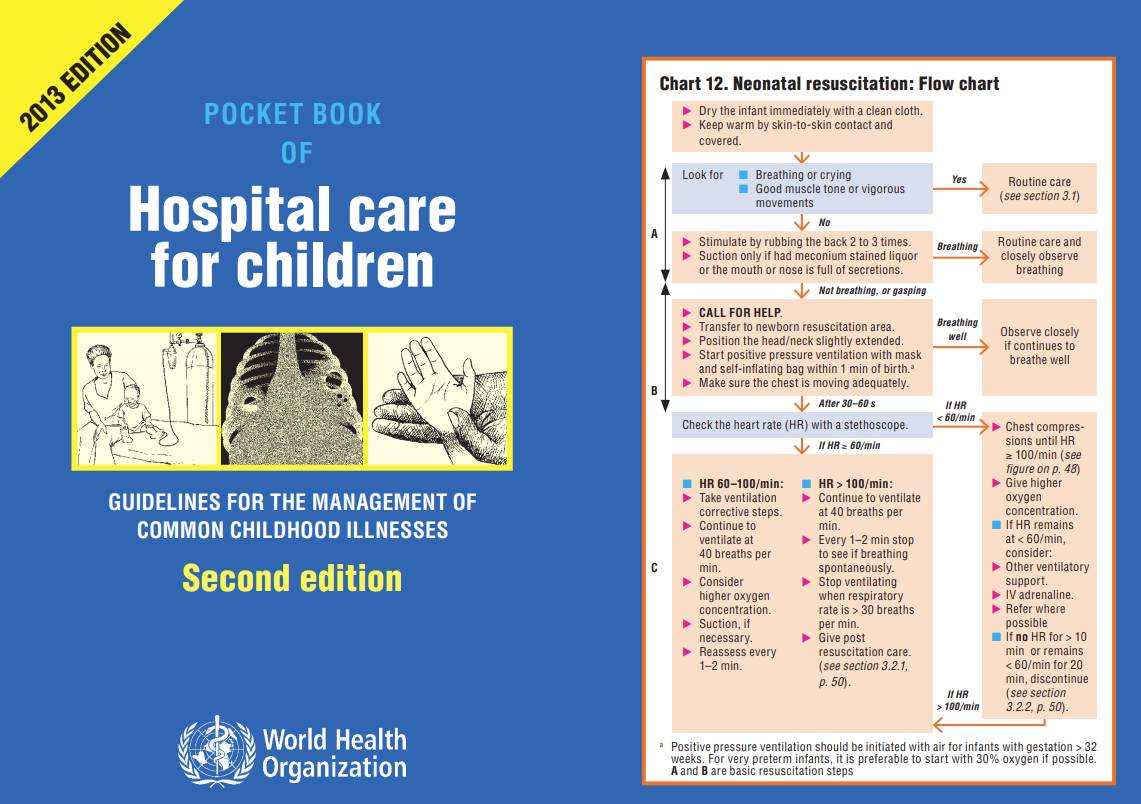
WHO Severe Malnutrition Guidelines
2013

This manual serves as a comprehensive and standardized guiding document, providing a rigorous, practical, and scientific framework for the diagnosis and management of Severe Acute Malnutrition (SAM) among the most vulnerable demographic group: children. It adopts an integrated healthcare model that balances early community-based care interventions - aimed at rapid detection and response within patients' localities - with specialized inpatient hospital care for critical cases or those suffering from life-threatening medical complications.
The manual's content extends beyond general guidelines to elaborate on precise therapeutic feeding protocols. This includes criteria for utilizing Ready-to-Use Therapeutic Food (RUTF), Ready-to-Use Foods (RTF), and therapeutic meals prepared within healthcare facilities. It also systematically covers strategies for diagnosing and managing common medical complications associated with acute malnutrition, such as severe infections, dehydration, and electrolyte imbalances, emphasizing approaches that minimize the risk of refeeding syndrome.
Furthermore, the manual establishes a clear and seamless referral mechanism between different levels of healthcare (from community to hospital and vice versa), ensuring continuity of care and reducing patient attrition throughout the treatment pathway. Due to its comprehensiveness and scientific precision, this manual constitutes an essential and indispensable cornerstone reference for frontline healthcare providers, health policy makers, and international and local humanitarian organizations operating in fragile contexts and crisis-affected environments - including those impacted by conflict and disaster - where malnutrition rates are exacerbated and health infrastructure is either absent or severely overstretched.

Exporter: World Health Organization (WHO)
Last Update: 11/11/2025
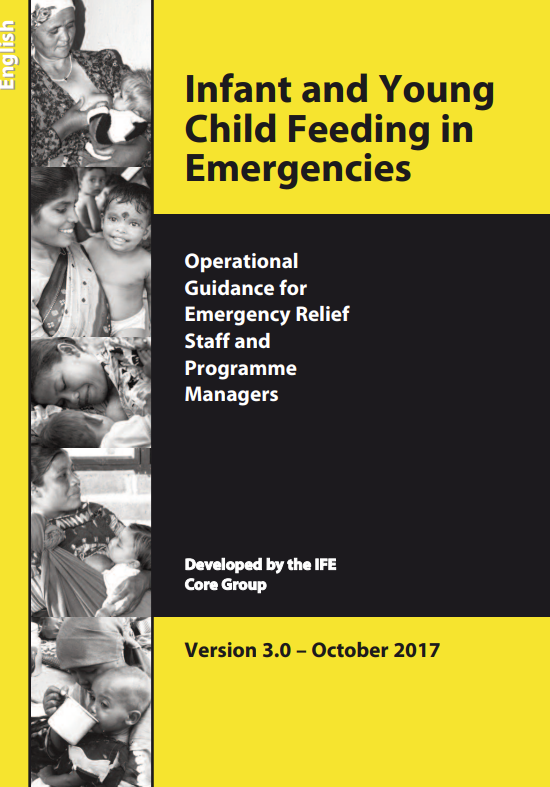
UNICEF IYCF-E Operational Guidance
2017

These operational guidelines constitute a comprehensive, evidence-based reference document, designed to provide a detailed framework and practical recommendations for ensuring safe and optimal Infant and Young Child Feeding (IYCF) practices in emergency and complex humanitarian crisis contexts. The document adopts a multi-level approach, primarily focusing on the protection, support, and practice of exclusive and continued breastfeeding as a supreme intervention priority to ensure child survival and optimal neurodevelopmental growth. It also provides rigorous guidance for the safe, ethical, and strictly regulated management and provision of Breastmilk Substitutes (BMS) only when medically indicated or in the mother's absence, emphasizing the avoidance of unethical marketing. Furthermore, the guidelines include standards for planning and implementing "Mother-Friendly Spaces" or safe feeding units that offer a private and protected environment for providing individualized support and appropriate complementary feeding for infants and young children. Additionally, it outlines an integrated methodology for qualifying and training health and humanitarian workers, as well as community volunteers, on approved principles, practical support strategies, and culturally sensitive communication skills. These guidelines are considered a pivotal policy and practical tool for national-level decision-makers and programme designers in international and humanitarian organizations, to translate global standards into concrete action plans that guarantee the right to optimal child nutrition in the most vulnerable circumstances. This contributes directly to reducing morbidity and mortality rates and improving long-term developmental outcomes.

Exporter: UNICEF
Last Update: 11/11/2025
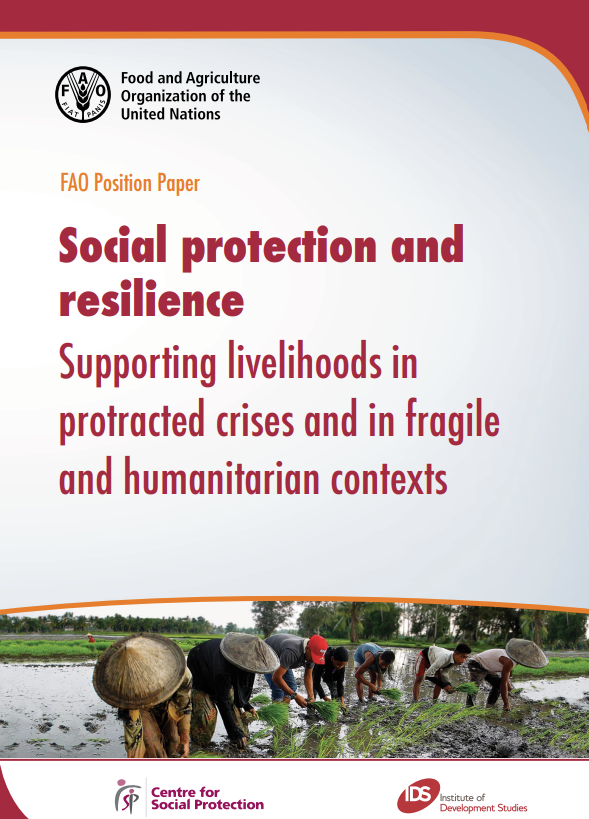
FAO Livelihood Support in Protracted Crises
2016

This operational guide provides a comprehensive strategic and practical framework for the planning, design, and implementation of livelihood support programmes within protracted and complex crisis contexts, such as chronic conflicts, long-term environmental disasters, and situations of sustained institutional and economic fragility. The guide is centered on a working philosophy that adopts a resilience-building approach. This approach transcends traditional short-term humanitarian response towards integrating dimensions of early recovery and sustainable development, aiming to bridge the functional gap between the immediate relief phase and the reconstruction and development phase. It places particular emphasis on empowering rural communities, smallholder farmers, pastoralists, and fisherfolk to secure sustainable and shock-resistant income sources. This is achieved through interventions based on key productive sectors such as climate-smart agriculture, sustainable livestock rearing, and responsible fisheries management and fishing. Furthermore, the guide presents an adaptable methodology that allows for the design of precise, contextually sensitive interventions. This is facilitated through an in-depth analysis of the local economic, social, and environmental context, the needs of target groups, and an assessment of available risks and opportunities. This ensures the programmes' effectiveness, relevance to the ground reality, and the achievement of the desired sustainable impact.

Exporter: Food and Agriculture Organization (FAO)
Last Update: 11/11/2025
Cash and Voucher Assistance for Nutrition Outcomes (CVA-N)
2020

This manual presents a comprehensive operational and strategic framework for integrating Cash and Voucher Assistance (CVA) methodologies into humanitarian programs aimed at improving the nutritional indicators and outcomes of vulnerable individuals and households in crisis and emergency contexts. The manual aims to transform cash assistance from a tool for meeting basic needs into an effective and targeted means of addressing all forms of malnutrition (acute, chronic, and wasting) and promoting healthy dietary practices. It covers an integrated methodology encompassing: the design and implementation of cash-sensitive nutrition interventions, which consider market dynamics, household purchasing power, and specific nutritional needs. It also details mechanisms for cross-sectoral linkage and coordination between nutrition programs and other vital sectors such as public health, Water, Sanitation and Hygiene (WASH), and food security, ensuring an integrated approach that addresses the root causes of malnutrition. Furthermore, the guide provides systematic guidance throughout the full project cycle, including: risk analysis (such as inflation and food insecurity in markets), evidence-based and culturally sensitive program design, and robust monitoring and evaluation systems focused on measuring direct and indirect nutritional impact, intervention efficiency, while emphasizing protection principles and gender equality.

Exporter: UNICEF & WFP
Last Update: 11/11/2025
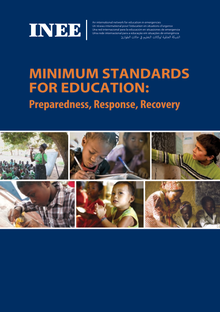
INEE Minimum Standards for Education
2010

This reference document constitutes a fundamental governance and normative instrument, designed to provide a global framework that guarantees educational quality and equity across all phases of the continuous and evolving emergency management cycle—from preparedness and anticipation, through immediate and effective response, to recovery built on resilience. Employing a comprehensive methodology, the document establishes the minimum standards to be achieved within five interconnected and integrated strategic domains: First, the coordination and governance of the response to ensure the effectiveness and harmony of interventions. Second, guaranteeing safe and inclusive access to education and stimulating the effective participation of all learners without discrimination. Third, creating safe, psychologically and physically supportive learning environments that are protected from harm. Fourth, ensuring the quality of the teaching and learning processes through methodologies that address learners' needs in crisis contexts. Fifth, formulating and implementing sustainable supportive policies and systems encompassing funding, planning, and workforce management. This document serves as a practically binding reference for national governments and local authorities, international and local humanitarian organizations, field practitioners, policy planners, teachers, and school administrators. Its purpose is to translate the theoretical principles of the right to education into measurable and accountable practical actions, particularly in contexts of displacement, conflict, and disaster.

Exporter: Inter-Agency Network for Education in Emergencies (INEE)
Last Update: 11/11/2025
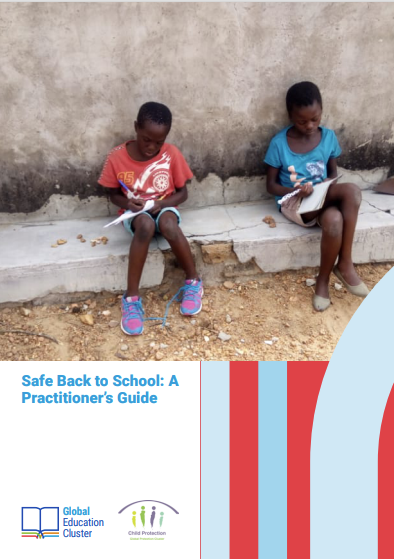
Safe Back to School Guide
2020

This manual constitutes a comprehensive strategic and practical reference, designed to guide national governments, local educational authorities, and partner organizations in the planning and implementation processes aimed at ensuring a safe, inclusive, and organized educational return to schools and educational institutions, following prolonged or intermittent closure periods caused by multidimensional crises. Such crises include global health pandemics (such as the COVID-19 pandemic), armed conflicts, or natural disasters. The manual provides a multi-level framework covering four fundamental, interconnected pillars: First, the strategic and operational planning for school reopening, including setting phased timelines, assessing infrastructure readiness, and defining coordination mechanisms among stakeholders. Second, developing and implementing an integrated set of public health and safety protocols within the school environment, encompassing measures for physical distancing, personal hygiene and sanitization, and mechanisms for early case detection and isolation of suspected cases. Third, designing and delivering systematic psychosocial support programs for students, teachers, and families, to address the psychological impacts of trauma and build resilience. Fourth, ensuring the continuity and quality of the educational process through developing remedial learning plans, adapting curricula, and providing blended learning options (in-person and remote). The manual places particular emphasis on the principle of equity and the inclusion of the most vulnerable and marginalized groups, such as girls, children with disabilities, displaced persons, and children from impoverished families, through designing targeted interventions that ensure no one is left behind in the journey back to learning.

Exporter: Global Education Cluster
Last Update: 11/11/2025
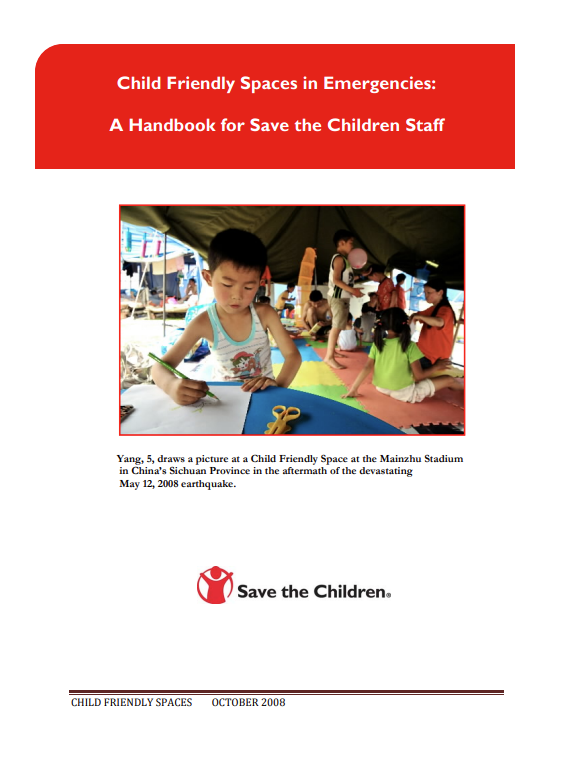
Child-Friendly Spaces in Emergencies Handbook
2008

This manual serves as a comprehensive, operational, and normative framework for establishing, operating, and managing "Safe and Child-Friendly Spaces" (CFS) within emergency and protracted crisis contexts, including armed conflicts, natural disasters, and complex humanitarian situations. It provides an integrated methodology covering all operational phases. This begins with strategic site planning and selection based on safety and accessibility criteria, and the design of supportive physical and psychological environments that consider diverse age and developmental needs. The guide proceeds through the development and implementation of a package of structured recreational-educational activities and psychosocial support programs that foster resilience and recovery. It also offers detailed guidance on the recruitment, qualification, and training of staff (coordinators, facilitators, and volunteers) on core skills in child protection, humanitarian principles, and referral mechanisms to specialized services. Furthermore, the manual includes the establishment of robust monitoring systems for continuous supervision and periodic evaluation of the space's performance and impact on children, while ensuring full compliance with established international standards. These standards primarily include the Core Commitments for Children in Humanitarian Action, the Sphere Humanitarian Charter and Minimum Standards (particularly the Protection Principle and relevant standards), and the Minimum Standards for Education in Emergencies (INEE). At its core, the manual aims to translate the principles of protection and psychosocial support into concrete, practical actions. These actions contribute to creating a protective environment that restores children's sense of safety, stability, and dignity, safeguards them from harm, and promotes their holistic well-being amidst crises.

Exporter: Save the Children
Last Update: 11/11/2025
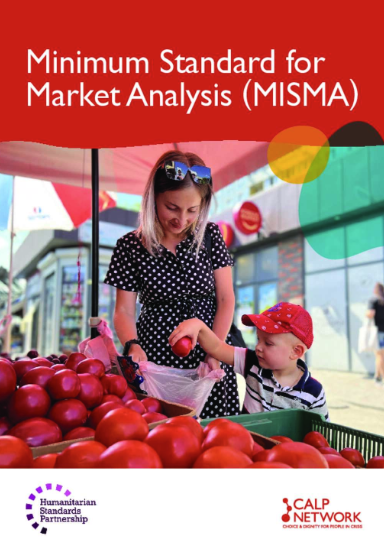
Minimum Standard for Market Analysis (MISMA)
2024

This manual serves as a fundamental normative and reference document for conducting systematic market analysis in humanitarian contexts and environments. It aims to establish a robust analytical framework to ensure that all humanitarian interventions, particularly programmes based on cash assistance and vouchers, are designed and implemented based on a profound and dynamic understanding of local market mechanisms. This is to mitigate unintended consequences and maximize economic benefits. The manual provides detailed, practical guidance covering the entire spectrum of market analysis. This begins with optimal methodologies for collecting primary and secondary data under challenging conditions, proceeds through comprehensive supply chain analysis techniques to identify vulnerabilities, bottlenecks, and opportunities within marketing channels, and extends to analyzing the behavior of key actors, including the spending patterns of consumers (beneficiaries) and the supply and pricing decisions of traders and suppliers. The manual also places particular emphasis on mechanisms for monitoring and evaluating the rapid and continuous changes in market dynamics during acute emergency phases and beyond, enabling organizations to adapt their responses flexibly and effectively. Consequently, the manual contributes to transforming cash assistance from a mere resource transfer into a tool for stimulating local economic stability and building resilience.

Exporter: CALP Network
Last Update: 11/11/2025
Cash in Emergencies Toolkit – CALP Network
2015

This kit constitutes a comprehensive and practical operational tool, specifically designed to provide systematic and direct support for the processes of designing, managing, and implementing cash assistance programmes within complex humanitarian and emergency contexts. The kit contains an integrated package of ready-to-use tools, customizable templates, and standardized models that meticulously and comprehensively cover all sequential and interconnected phases of the complete programme cycle. These phases begin with context analysis, needs assessment, and operational feasibility studies, progress to the detailed programme design stage including the formulation of targeting criteria and results frameworks, then move to key implementation stages encompassing beneficiary registration, screening, and data verification, as well as the identification and selection of the most technically and financially appropriate transfer mechanisms (such as direct cash transfers, mobile-based systems, smart cards, or e-vouchers). The kit also includes dedicated tools for the final stages involving continuous monitoring, operational and financial oversight, and final impact and efficiency evaluation. It is distinguished by its incorporation of advanced technical considerations, precise financial requirements, and evolving digital aspects, ensuring its alignment with industry standards and global best practices. It is primarily intended for use by field workers, programme managers, and technical support teams within humanitarian organizations, aiming to provide a standardized, unified foundation that simplifies processes, accelerates response timelines, and enhances accuracy and reliability. Consequently, it ensures the delivery of a humanitarian response characterized by high efficiency, maximum effectiveness, and the requisite speed under emergency conditions.

Exporter: CALP Network
Last Update: 11/11/2025