A Reliable Knowledge Base for a Deeper Understanding of Humanitarian Work

Written Knowledge

This section brings together a curated selection of books, articles, and specialized reports in the humanitarian field, prepared or reviewed by experts to ensure quality and accuracy, alongside the analytical reports and specialized studies published regularly by the Relief Center. Here, you can explore a rich collection of policy papers, analytical studies, and opinion pieces, categorized by type, theme, or language. These resources help you build a deeper understanding of humanitarian contexts and support your professional decisions with solid, evidence-based knowledge.

There are: 50 items
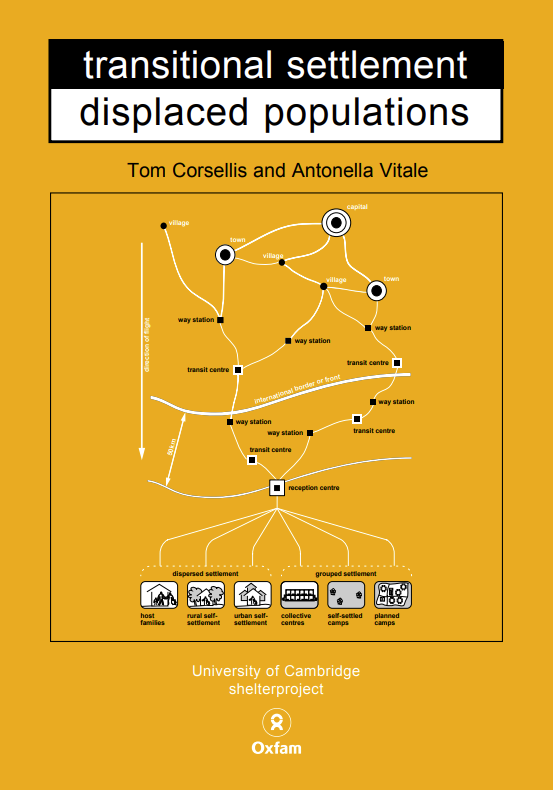
Transitional Settlement: Displaced Populations
2005

Transitional Settlements: Displaced Populations – Shelter Centre (2005) provides a comprehensive framework for the planning, implementation, and management of various types of transitional settlements designed to accommodate forcibly displaced populations. The guideline offers a systematic classification comprising six primary categories of settlements, including spontaneous sites, planned camps, collective centers, and self-settlement arrangements in both urban and rural contexts.
The document outlines an integrated procedural sequence that guides humanitarian practitioners throughout the settlement management cycle - from risk analysis and needs assessment, through planning, design, and implementation, to monitoring and evaluation. It places strong emphasis on a phased, adaptive approach that aligns with the evolving needs of displaced communities, while underscoring the importance of community participation, security of tenure, structural safety, livelihood support, and long-term environmental sustainability.

Exporter: Shelter Centre
Last Update: 11/11/2025
Sphere WASH Standards
2018

These standards constitute a cornerstone within the global reference framework provided by the Sphere Handbook, designed as a practical and safeguarding tool to meet vital humanitarian needs in times of crisis. At their core, these standards aim to guarantee the right of all affected people, including the most vulnerable groups, to sustainable access to safe and clean drinking water that meets their basic needs, to live in a healthy environment free from physical and biological hazards, and to have adequate personal hygiene services and materials that uphold their human dignity and enhance their sense of safety. This integrated focus serves as a crucial first line of defense to prevent the outbreak of water-borne and environment-related diseases, thereby protecting public health within the affected community and mitigating human suffering.
The standards encompass a comprehensive scope through four principal, interconnected, and indivisible intervention areas. These include ensuring the adequacy and quality of water supplies from source to point of consumption, providing appropriate and dignified sanitation facilities that are gender-, age-, and disability-sensitive, promoting effective personal and domestic hygiene practices through informed behavior change programs, and managing solid and liquid waste in safe ways that protect the environment. For each of these areas, the standards define clear strategic objectives and measurable qualitative and quantitative performance indicators, accompanied by detailed, practical, and field-applicable technical guidance. This provides implementers with a clear roadmap to achieve the desired outcomes.
Furthermore, these standards do not overlook the broader strategic considerations that ensure the effectiveness and sustainability of interventions. They fundamentally emphasize the importance of engaging affected communities in all program stages - from assessment and design to implementation and monitoring - which fosters community ownership and enhances cultural appropriateness. The standards also mandate the necessity of considering the environmental dimension in all activities to minimize negative impacts on natural resources. Moreover, they highlight the principle of organic integration with interventions from other humanitarian sectors, particularly health, shelter, and food security. This aims to create a stronger cumulative impact and avoid duplication of efforts, all within the pursuit of a coherent and integrated humanitarian response anchored in the principles of dignity, rights, and accountability.

Exporter: Sphere Association
Last Update: 11/11/2025
Global WASH Cluster Technical Guidelines
2017

These guidelines represent a normative and practical reference document, specifically designed to steer the systematic planning, design, and implementation of Water, Sanitation, and Hygiene programs within complex humanitarian crisis and emergency contexts. This document was developed and enriched within an expansive collaborative framework involving a strategic partnership with the Global WASH Cluster, granting it technical legitimacy and broad consensus among international actors.
The document adopts a comprehensive methodology focused on ensuring a humanitarian response in the WASH sector that is integrated in its components, rapidly deployable, and capable of adapting to the shifting dynamics of the emergency landscape. Its philosophy is also founded on the principles of contextuality and customization, obliging planners and implementers to develop a deep understanding of the local environment - including its cultural, social, gender, and environmental considerations - and to build upon a precise assessment of the actual needs and field-level challenges faced by affected populations.
The guidelines cover a broad range of strategic and interconnected intervention areas, which include:
1. Needs Assessment and Contextual Analysis: Utilizing systematic tools for primary and secondary data collection.
2. Provision and Distribution of Safe Water: Encompassing sourcing, transportation, storage, treatment, and ensuring sustainable access.
3. Design, Construction, and Management of Appropriate and Dignified Sanitation Facilities: With an emphasis on universal access, including for persons with disabilities, gender separation, safety, and privacy.
4. Promotion of Hygiene Practices and Behavior Change: Through designing evidence-based awareness campaigns, community participation, and the targeted distribution of hygiene supplies.
5. Safe Environmental Management of Liquid and Solid Waste: To prevent contamination and mitigate health and environmental risks.
6. Institutional Coordination and Integration with Other Sectors: Such as health, nutrition, shelter, and protection, to maximize impact and ensure an integrated response.
To achieve these objectives, the document goes beyond theoretical guidance. It equips practitioners with a rich set of detailed technical tools, replicable models, and practical recommendations grounded in accumulated experience and best field practices drawn from diverse global experiences. This approach ultimately aims to empower humanitarian actors to implement effective interventions capable of meeting the internationally agreed minimum standards for service quality, contributing to the preservation of human dignity, reducing the spread of diseases, and supporting the resilience and recovery of affected communities.

Exporter: Global WASH Cluster
Last Update: 11/11/2025
WASH in Health Care Facilities: Practical Steps
2019

This practical guide, jointly published by the United Nations Children's Fund (UNICEF) and the World Health Organization (WHO) in 2019, establishes a comprehensive strategic and operational framework. Its core objective is to develop and institutionalize Water, Sanitation, and Hygiene (WASH) services as a fundamental, indispensable component of the infrastructure and service delivery within all healthcare facilities, with a critical and focused emphasis on fragile, crisis-, and disaster-affected environments.
The guide underscores the symbiotic and vital nature of integrating WASH services into the operational and preventive fabric of the health system. It positions these services not merely as supportive utilities but as a foundational prerequisite for achieving multiple critical goals. These include the effective prevention and control of healthcare-associated infections (IPC), the protection of healthcare workers and patients from biological and chemical hazards, the assurance of patient dignity, the enhancement of the quality and outcomes of care provided, and ultimately, the strengthening of the healthcare facility's own resilience in the face of shocks.
Moving beyond theoretical frameworks, the guide provides a tangible set of practical tools and detailed guidance for the planning, implementation, and monitoring of WASH services. It proposes a structured, stepwise approach to implementation consisting of sequential phases. These begin with a standards-based comprehensive assessment of the existing situation, followed by a process of priority-setting and the establishment of measurable objectives. The subsequent phase involves developing practical action plans that include resource and budgetary planning, leading to the actual implementation stage, which is supported by mechanisms for continuous monitoring and evaluation. Furthermore, the guide places significant emphasis on strengthening community engagement and social accountability mechanisms, considering them vital elements for ensuring the sustainability of improvements and their responsiveness to the community's real needs.
By combining technical depth with procedural clarity, this document serves as a pivotal applied reference for supporting health policymakers, facility managers, and humanitarian organizations operating in the field. It provides a clear roadmap for improving the physical environment and essential services within healthcare facilities. This contributes directly to enhancing their safety and operational effectiveness, particularly during emergencies when the need for reliable WASH services is at its peak.

Exporter: UNICEF & WHO
Last Update: 11/11/2025
Compendium of Sanitation Technologies in Emergencies
2018

This reference document, jointly published by the Sustainable Sanitation Alliance (SuSanA) and the Global WASH Network, constitutes a highly specialized technical guidance document aimed at bridging the critical gap between theory and practice in the field of sanitation during humanitarian crises and emergency contexts. It provides a methodological and practical framework for designing and implementing integrated, context-appropriate sanitation solutions through a comprehensive review and analysis of a wide spectrum of technologies and engineered systems.
This analysis spans a broad range, extending from decentralized sanitation systems (such as improved pit latrines, chemical toilets, and urine-diverting dry toilets) to semi-centralized collective systems (like simplified sewer networks and motorized vacuum tanker services). Furthermore, it delves in-depth into the critical yet often neglected post-defecation phase, offering detailed guidance on the safe and sustainable management of faecal sludge - encompassing the entire chain from collection and transport to treatment and final disposal or reuse.
The guide is distinguished by its reliance on advanced decision-support models and methodologies that move beyond simple checklists to present multi-criteria assessment matrices. These matrices enable field planners and engineers to select the optimal technology by balancing a complex set of factors. These include: hydrogeological conditions (such as groundwater levels and soil type), population density and settlement patterns, available institutional and operational capacities, constrained budgets, the cultural and social acceptability for affected communities, alongside long-term environmental considerations.
This comprehensive guidance ultimately aims to ensure that the proposed solutions are not only effective in addressing the immediate emergency but are also designed for sustainability. They carefully incorporate public health safety standards to prevent waterborne disease outbreaks, minimize negative environmental impact, and contribute to building the resilience and long-term well-being of affected communities beyond the immediate crisis phase.

Exporter: German WASH Network, Eawag, SuSanA, Global WASH Cluster
Last Update: 11/11/2025
Sphere Health Standards
2018

The health standards outlined in the fourth edition (2018) of the Sphere Handbook constitute a comprehensive and normative reference framework, designed to establish the foundations for effective, principled, and evidence-based humanitarian health responses in complex crisis and emergency contexts. This framework extends beyond offering general recommendations; it presents an integrated operational model that bridges overarching theoretical principles with concrete field-level application requirements. This model is structured around four strategic and interconnected intervention areas: strengthening the resilience and functionality of health systems under difficult conditions, implementing proactive preventive measures to curb the outbreak of communicable diseases, ensuring the provision of essential and specialized clinical care services in accordance with ethical and professional standards, and securing a comprehensive package of reproductive health services that respect individuals' privacy, physical, and psychological safety, particularly for the most at-risk groups.
The Handbook adopts a philosophy centered on delivering health services characterized by equitable and fair access, safety from harm, and inclusivity that leaves no one behind. It also places at the heart of its priorities ensuring the quality and contextual appropriateness of the care provided. The methodology it employs is highlighted through a balanced emphasis on three fundamental pillars: respecting the inherent human dignity and basic rights of affected people, enabling effective and informed community participation in all stages of health intervention, and promoting coordination and organic integration with other humanitarian sectors such as nutrition, water and sanitation, shelter, and protection, striving to achieve a greater cumulative impact.
To translate these principles into practical reality, the Handbook structures its content in the form of clear strategic objectives, measurable and monitorable performance indicators, and detailed, practical implementation guidance for health workers in the field. This systematic construction aims, in its entirety, to support the design and implementation of a coherent and organized health response, capable of adapting to evolving challenges, while remaining firmly anchored in universal humanitarian values and committed to accountability standards towards the local community and stakeholders.

Exporter: Sphere Association
Last Update: 11/11/2025
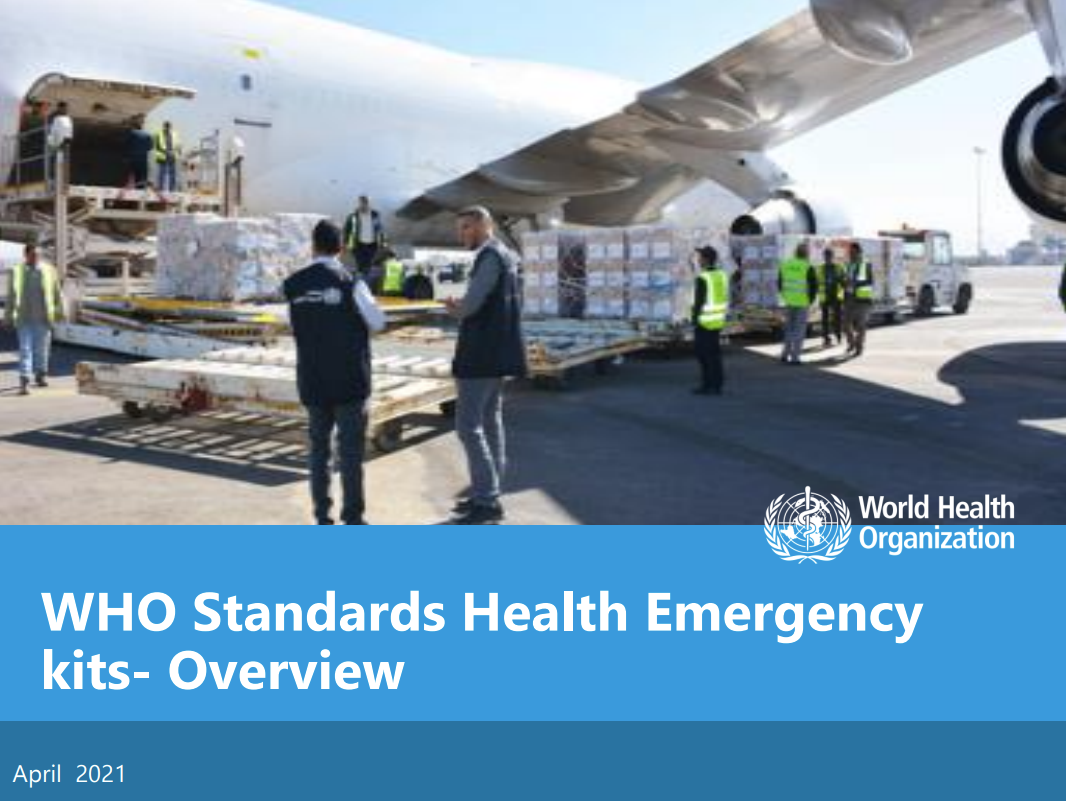
WHO Emergency Health Kit Guidelines (IEHK)
2019

The Interagency Emergency Health Kit (IEHK) is the outcome of a strategic, multilateral collaboration spearheaded by the World Health Organization. It was established as a standardized, internationally unified tool to facilitate the rapid and coherent supply of essential medicines and medical commodities during the critical initial phase of a humanitarian response. This kit is engineered to mirror the urgent health needs in crisis-stricken environments and consists of two core units: the basic unit, which covers the minimum pharmaceutical requirements for a defined population, and supplementary units, which address specific conditions and diseases. This modular design allows for scalable response capacity to match the varying nature of crises. The units are designed to meet the primary healthcare needs of a typical population ranging from 1,000 to 10,000 individuals for a period of up to three months, thereby serving as a vital bridge between immediate relief and long-term rehabilitation.
The accompanying 2019 Training Manual provides a comprehensive and clear instructional document that goes beyond a mere inventory of contents to include an in-depth analysis of their practical field applications. The manual covers a wide spectrum of health priorities in crises, such as: controlling communicable and neglected tropical diseases, providing comprehensive reproductive health services, caring for newborns and children, performing basic and lifesaving surgical interventions, and preparing for and responding to public health emergencies. The Interagency Emergency Health Kit, along with its training manual, can be regarded as a global reference and an indispensable operational framework in the toolkits of humanitarian organizations. It ensures a uniform standard of quality and efficacy, promotes a harmonized and swift life-saving response, and enables the efficient provision of vital health supplies in the world's most vulnerable, disaster-affected environments.

Exporter: WHO and partners
Last Update: 11/11/2025
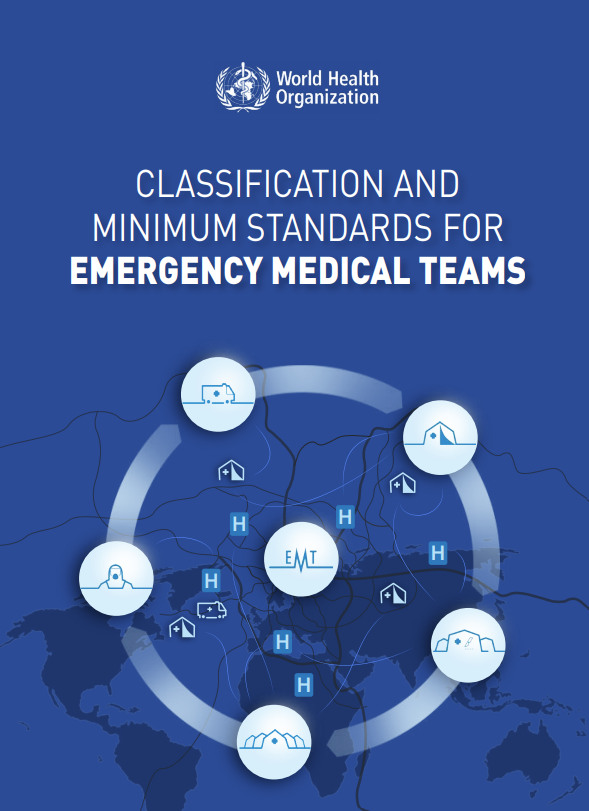
WHO EMT Minimum Standards
2021

The "Emergency Medical Teams (EMT) Standards," issued by the World Health Organization in 2021, constitute a comprehensive international regulatory and operational framework. Its purpose is to enhance the quality of cross-border medical response in the contexts of disasters and complex humanitarian emergencies. This framework aims to establish a harmonized global system that ensures the application of the highest standards of quality, safety, and efficacy by standardizing practices and improving coordination processes among various deploying international and local medical teams.
The framework features a detailed classification structure that categorizes response medical teams into three primary tiers, reflecting their operational capacities and service scope:
1. Tier 1 (EMT-1): Specializes in providing primary and emergency healthcare services through mobile or static outpatient clinics, focusing on outpatient care, basic diagnostics, and referral.
2. Tier 2 (EMT-2): Provides advanced healthcare, including capacity for short-term inpatient care, limited emergency surgical services, and basic laboratory support.
3. Tier 3 (EMT-3): Represents the highest level of capability, delivering comprehensive healthcare that includes full surgical services, inpatient care for longer durations, and advanced diagnostic and laboratory support.
The framework defines an integrated set of mandatory operational standards covering all aspects of deployment and service delivery. These range from the clinical competency of personnel and the suitability of medical equipment, through standards for medical record documentation and information management, to stringent protocols for patient safety and infection prevention and control in high-risk environments. Furthermore, the framework places significant emphasis on security and safety requirements for staff and assets, mechanisms for accountability and transparency, and the necessity for operational harmony and integration with the national health systems of host countries to ensure sustainability and avoid disruption to existing health infrastructure.
These comprehensive standards are formally encapsulated in the WHO's official reference publication, commonly known as the "Blue Book." This document is regarded as an authoritative and essential guide for all humanitarian and health actors. Its ultimate goal is to ensure the delivery of professional, safe, effective, and evidence-based emergency medical interventions that uphold the dignity of affected populations and align with international humanitarian principles.

Exporter: World Health Organization (WHO)
Last Update: 11/11/2025
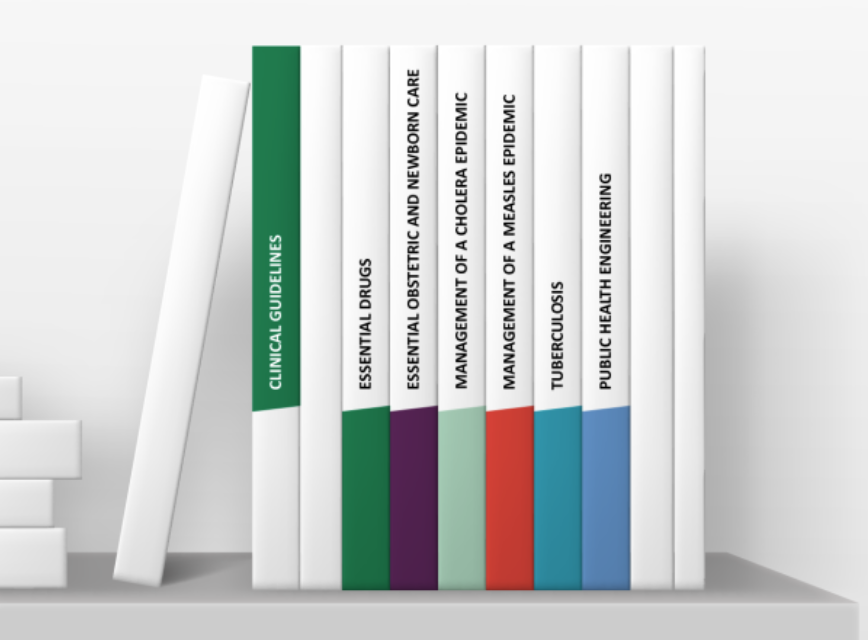
MSF Medical Operational Guidelines
2021

The "Emergency Field Manual," published by Médecins Sans Frontières (MSF), represents a comprehensive operational reference, engineered to support medical and logistical teams operating on the front lines of complex humanitarian crises and disasters. The manual's core objective is to enhance immediate and effective response by providing a proven, systematic framework covering an integrated continuum of life-saving medical procedures and critical interventions. This spans from rapid, on-the-ground health situation and emergency needs assessments, to the application of precise emergency care protocols and essential field surgery under resource-constrained conditions.
Furthermore, the manual delves into methodologies for managing critical cases and coordinating responses to mass casualty incidents (triage and casualty management), offering detailed guidelines for handling a broad spectrum of emergencies. These include trauma injuries resulting from conflict or natural disasters, epidemic and neglected infectious diseases, and reproductive health emergencies, as well as mental health and psychosocial support considerations. Crucially, the manual does not overlook the vital aspect of stringent security and safety protocols and standards, applicable both to medical equipment and essential supplies and to staff operating in high-risk environments, thereby ensuring the sustainability of relief operations and the protection of service providers.
Primarily utilized within the framework of Médecins Sans Frontières operations, this manual is distinguished by its direct, practical, and accessible style, deliberately free of unnecessary academic complexities. It focuses on facilitating rapid, pragmatic decision-making under time pressure and within harsh, volatile conditions. This makes it an indispensable working tool in the kit of every emergency relief worker.

Exporter: Médecins Sans Frontières (MSF)
Last Update: 11/11/2025
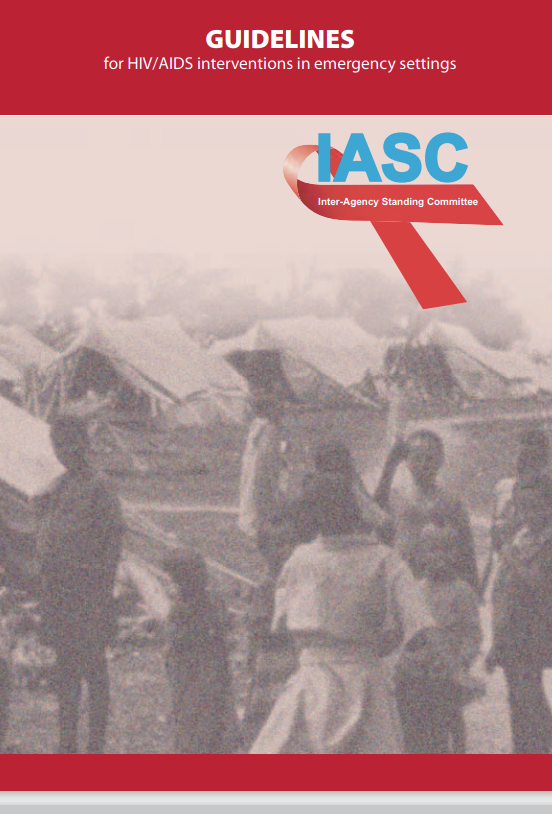
IASC HIV/AIDS Guidelines in Emergencies
2010

These guidelines, issued in 2010 by the Inter-Agency Standing Committee (IASC) in collaboration with UNAIDS and a broad network of partners, represent a pivotal strategic document aimed at enhancing the comprehensive response to HIV/AIDS in humanitarian contexts. They provide a practical and integrated framework designed to systematically mainstream essential HIV/AIDS-related prevention, treatment, care, and support services - cross-sectorally - into humanitarian response mechanisms during emergencies and protracted crises.
The scope of this framework extends beyond general recommendations, delving into the provision of applicable practical tools, embodied in detailed sector-specific worksheets covering key vital areas of intervention. These sectors include: Health (encompassing clinical and laboratory services), Protection (with a focus on the most vulnerable populations and survivors of gender-based violence), Shelter and Non-Food Items, Water, Sanitation, and Hygiene (WASH), and Food Security and Nutrition. The guidelines also accord particular attention to several strategic pillars, including: implementing targeted and culturally sensitive awareness campaigns to combat stigma and discrimination, ensuring uninterrupted continuity of Antiretroviral Therapy (ART) for people living with HIV, providing Post-Exposure Prophylaxis (PEP) for survivors of assault and violence, strengthening interventions for the Prevention of Mother-to-Child Transmission (PMTCT), and establishing robust monitoring and evaluation mechanisms to measure progress and ensure accountability and effectiveness in program implementation.
By combining a comprehensive strategic vision with detailed operational tools, these guidelines constitute an indispensable manual for policymakers, humanitarian response coordinators, and field service providers. Their ultimate aim is to ensure that the response to any humanitarian crisis is responsive to the needs of people affected by HIV/AIDS, protective of their rights, and faithful to the principle of "leaving no one behind," even in the most challenging circumstances.

Exporter: IASC & UNAIDS
Last Update: 11/11/2025